Is Your 10% Dividend a Trap?
High dividend yield is not proof of quality. It can signal stress, weak coverage, and a business model under pressure.
- dividend traps
- payout ratios
- cash flow quality

Track 02
Learn how to evaluate dividend quality, sector-specific evidence, and real company filings instead of relying on narratives.
Ideal reader: Readers who want to judge business quality, earnings durability, and whether a story is supported by numbers.
Best next read: Read Issue #4 first, then continue through Issues #5 and #6.
How this track fits
This track works best when read as part of the full algo2alpha sequence: framework, evidence, then execution.
High dividend yield is not proof of quality. It can signal stress, weak coverage, and a business model under pressure.
Strong investing claims need evidence. Sector-specific metrics and earnings quality tests separate persuasive stories from real operating strength.
Big spending is not automatically reckless. In capital-intensive sectors, capex must be understood in the context of scale, strategy, and expected return.
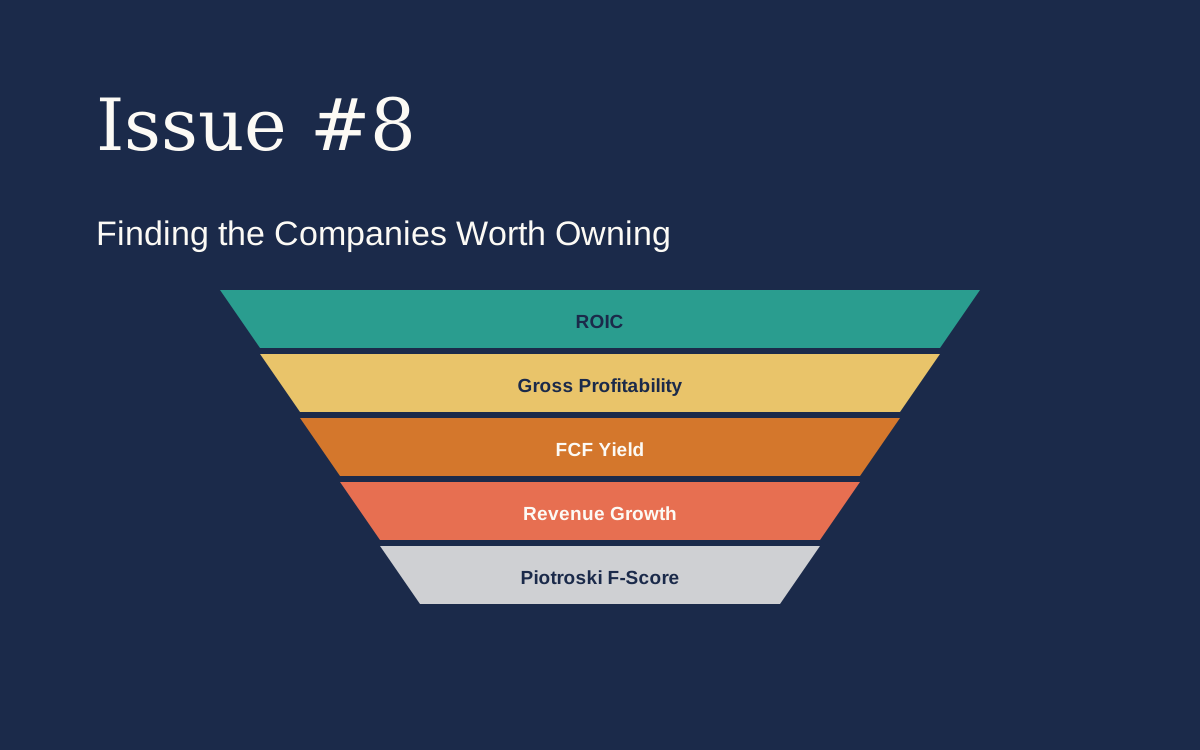
ROE flatters companies that borrow to buy back shares. A five-factor quality screen using ROIC, gross profitability, FCF yield, revenue growth, and Piotroski F-Score finds the businesses that earn their returns rather than engineer them.
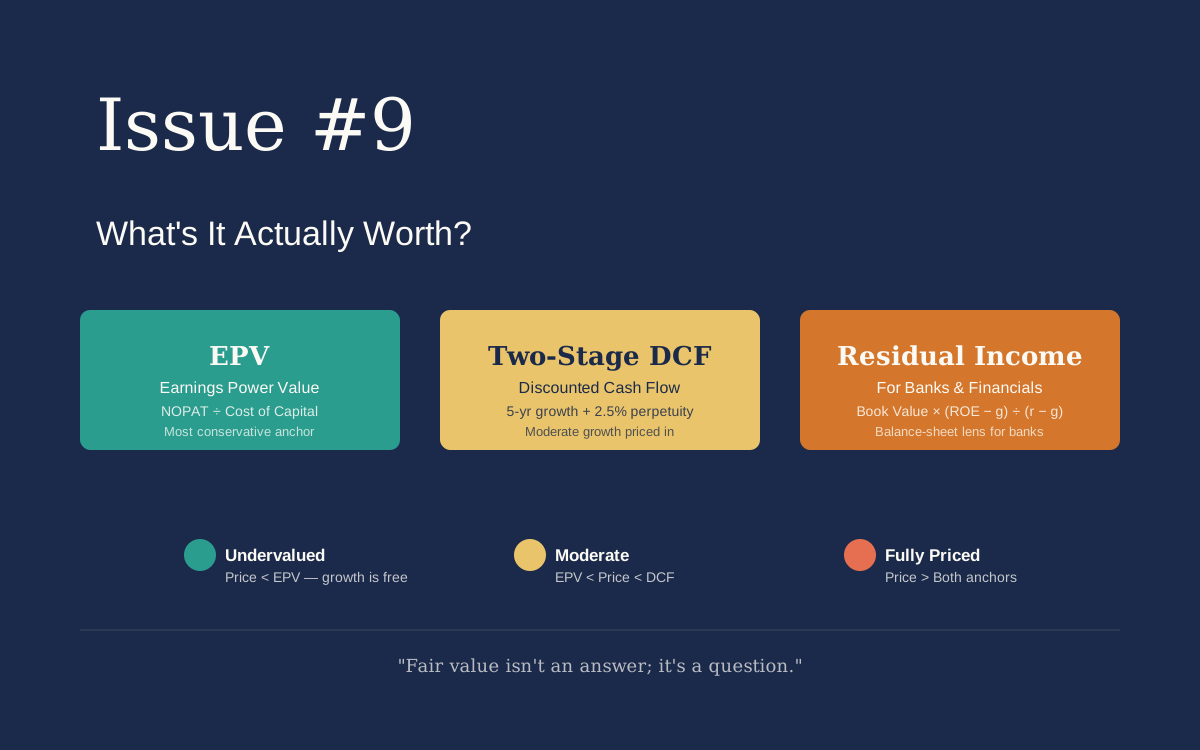
Passing a quality screen is only half the answer — you still need to know what you're willing to pay. Three valuation frameworks (EPV, two-stage DCF, and a residual income model for banks) combine into a traffic-light signal that separates genuinely cheap companies from those that already price in perfection.
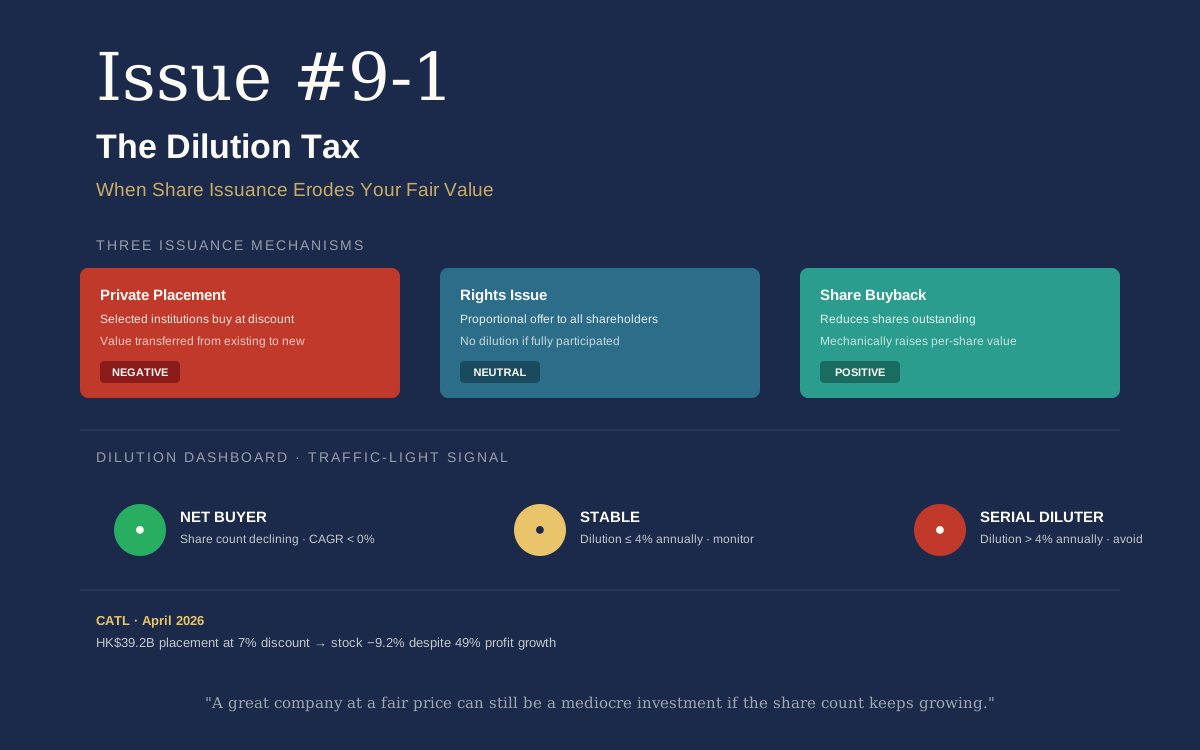
Fair value frameworks spend enormous effort on the numerator — earnings, cash flows, discount rates. Issue #9-1 turns the lens on the denominator: the share count. Three issuance mechanisms carry three distinct shareholder outcomes, and a five-year dilution dashboard converts historical share-count drift into a forward EPV adjustment and a traffic-light signal every investor can apply before buying.
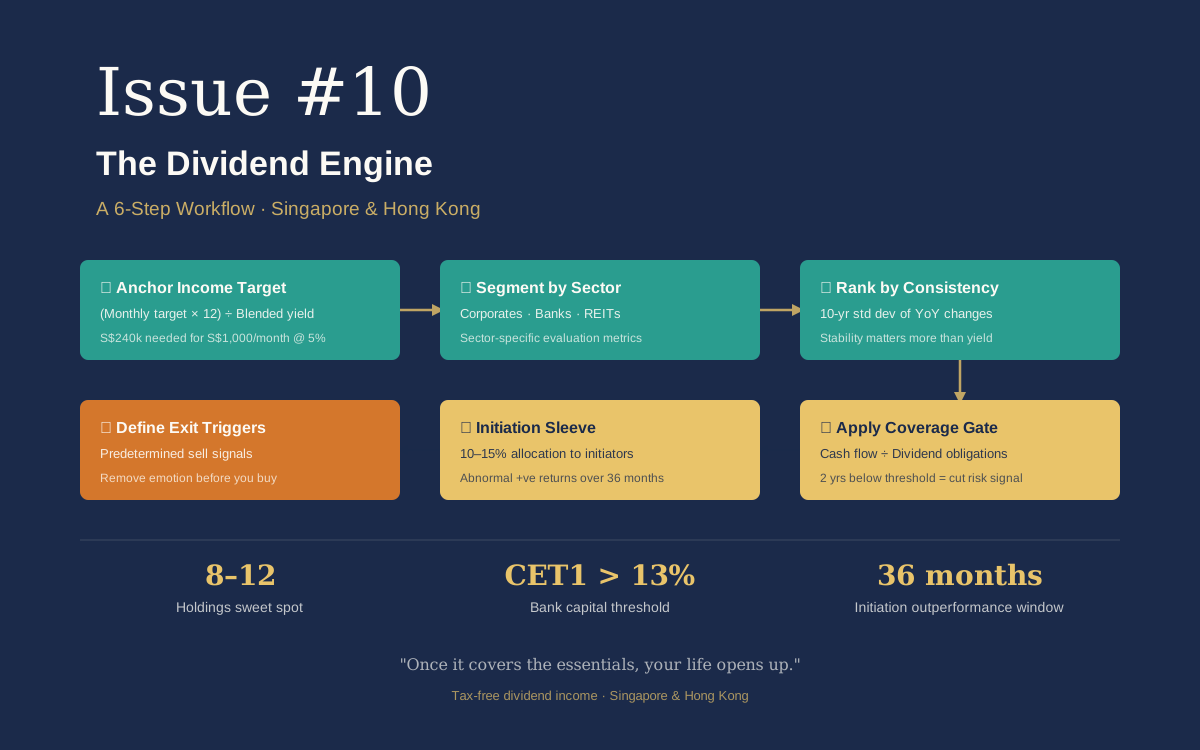
Dividend portfolios create financial optionality — not instant wealth. A six-step workflow covering income targeting, sector segmentation, consistency ranking, coverage gates, an initiation sleeve, and pre-defined exit triggers gives Singapore and Hong Kong investors a repeatable system for building portfolios that pay every month, tax-free.